| | IST Distinguished Lecturer: Anne L’Huillier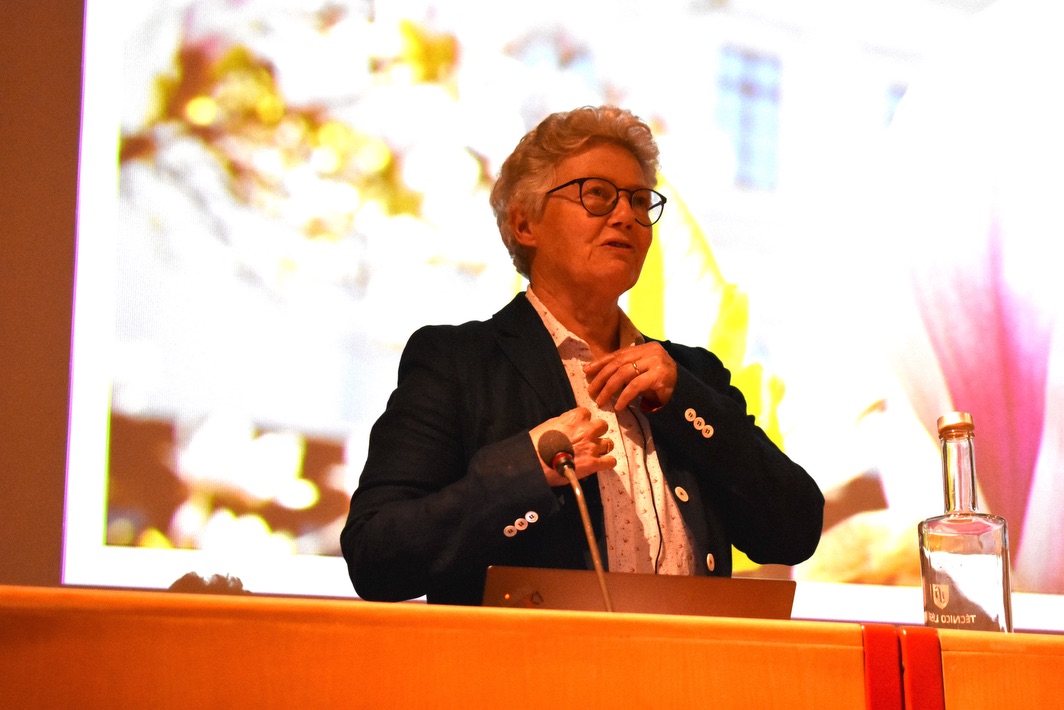
Anne L’Huillier no Centro de Congressos do IST (Fotografia: M.N. Rebelo) Na tarde de 27 de maio, o Centro de Congressos do IST acolheu uma IST distinguished Lecture, coorganizada pelo Instituto de Plasmas e Fusão Nuclear (IPFN) e pelo Departamento de Física do Instituto Superior Técnico. Laureada com o Prémio Nobel de Física no ano passado, Anne L’Huillier deu uma palestra intitulada 'O caminho para os pulsos de attosegundo' para um auditório cheio, traçando a cronologia da investigação em pulsos de luz ultracurtos.
Anne L’Huillier terminou a palestra com uma nota de inspiração para os estudantes e investigadores na audiência. Ao mostrar uma fotografia sua a receber o Prémio Nobel numa cerimónia com o Rei da Suécia disse 'se estiverem no lugar certo, na hora certa, talvez acabem aqui'. | |
| | IST Distinguished Lecture: Alain Aspect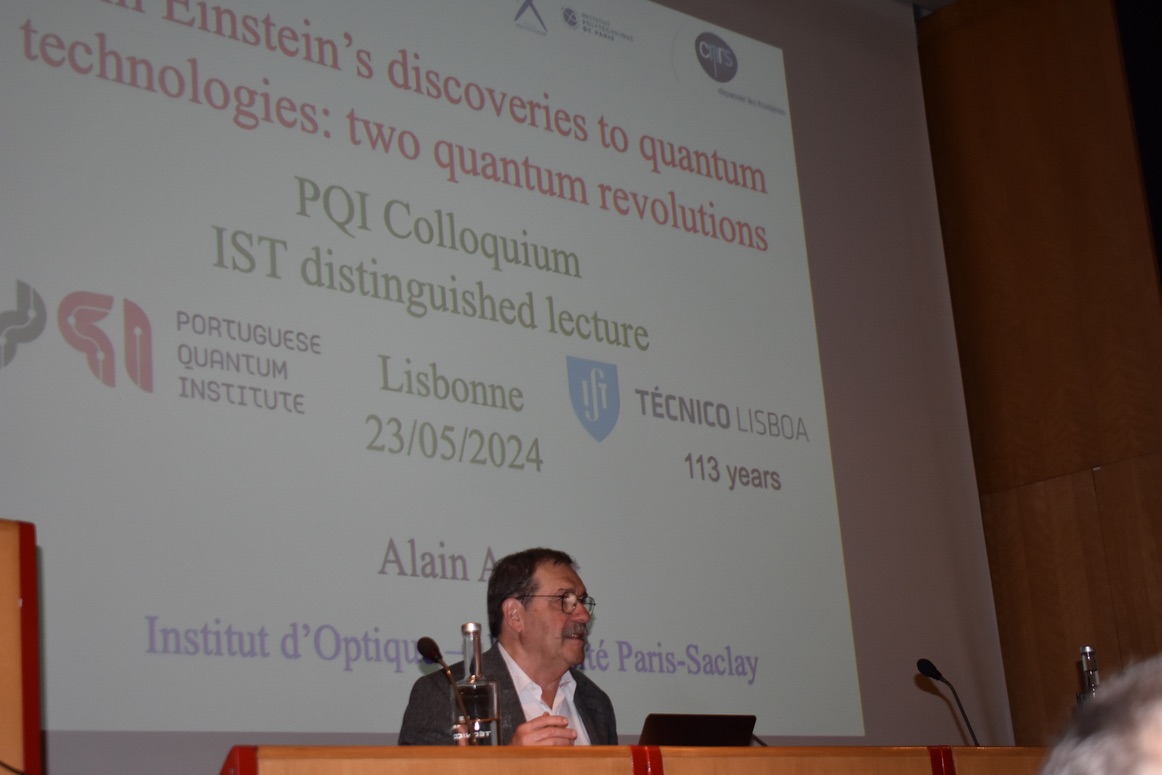
Alain Aspect no Centro de Congressos do IST (Fotografia: M.N. Rebelo) No dia 23 de maio, o Professor Alain Aspect (Institut d'Optique- Université Paris-Saclay) apresentou a IST Distinguished Lecture com o título "From Einstein and Bell to Quantum Technologies” no grande auditório do Centro de Congressos do IST. Aspect foi galardoado com o Prémio Nobel da Física de 2022, juntamente com John Clauser e Anton Zeilinger, "por experiências com fotões emaranhados, estabelecendo a violação das desigualdades de Bell e sendo pioneiro na ciência da informação quântica". Neste colóquio, Aspect discutiu as suas experiências pioneiras sobre emaranhamento quântico, um ingrediente fundamental para o desenvolvimento de tecnologias quânticas, nomeadamente a computação quântica, as redes quânticas e a deteção e metrologia quânticas. | |
| | IST Distinguished Lecture: Roger Blandford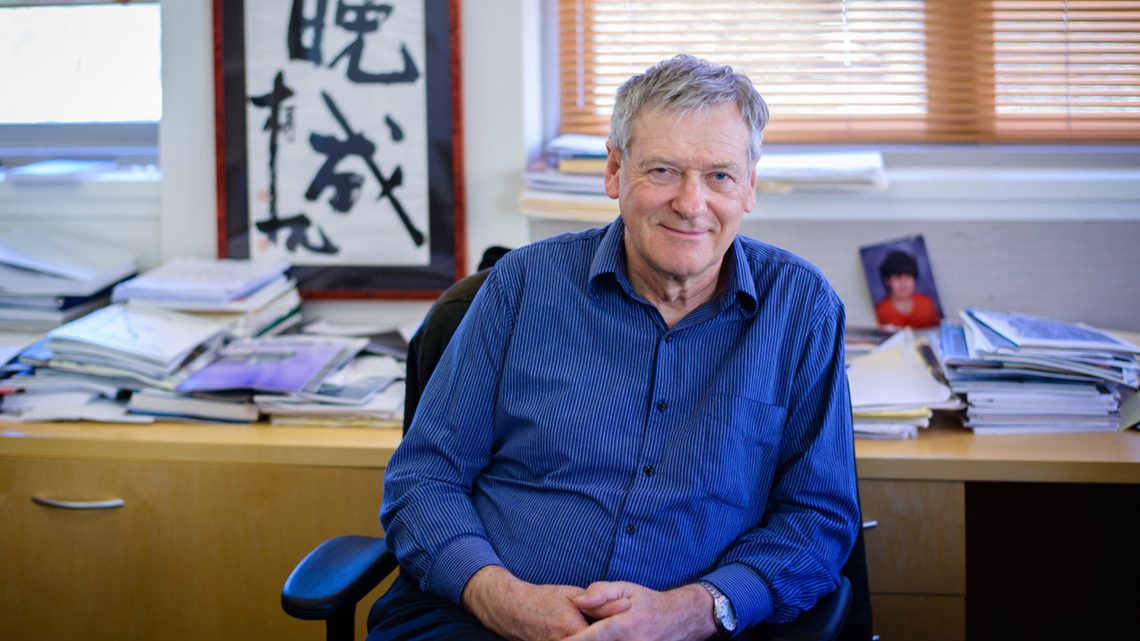
O Prof. Roger Blandford (Stanford University) foi o orador da IST Distinguished Lecture intitulada "Extreme Electrodynamics of Compact Sources", que teve lugar no dia 19 de abril de 2024, organizada pelo Grupo de Lasers e Plasmas do Instituto de Plasmas e Fusão Nuclear, pelo Centro de Astrofísica e Gravitação e pelo Departamento de Física.
Roger Blandford é um dos líderes mundiais em física de plasmas, astrofísica e cosmologia, com muitas contribuições pioneiras que vão desde os mecanismos de aceleração de raios cósmicos e a geração de jactos relativistas emitidos por buracos negros até às lentes e ondas gravitacionais.
De acordo com o astrofísico da Universidade de Stanford, o objetivo principal da palestra foi mostrar que “a eletrodinâmica, uma das áreas mais bem compreendidas da física, está sendo expandida para novos horizontes graças às observações astronómicas, especialmente as relacionadas com estrelas de neutrões e buracos negros”. Blandford expressou grande interesse em entender como a eletrodinâmica opera nesses ambientes extremos. Ao longo da sua carreira, Blandford recebeu vários prémios de prestígio e é membro de várias academias científicas. Dirigiu o Decadal Survey of Astronomy and Astrophysics da Academia Nacional de Ciências entre 2008 e 2010 e é atualmente diretor da Simons Collaboration on Extreme Electrodynamics of Compact Sources. | |
| | Novo docente do DF: Rúben Conceição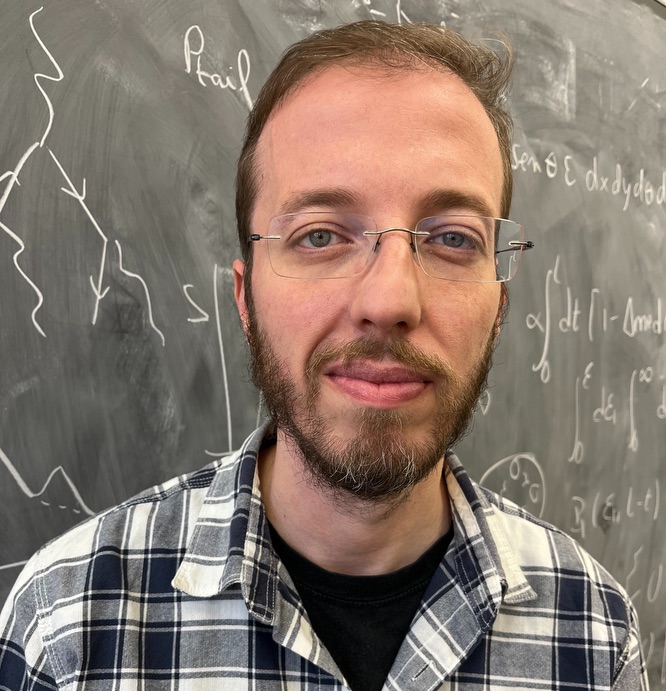
Rúben Conceição concluiu o seu doutoramento no IST em 2011 como membro da colaboração Pierre Auger. Nos seis anos imediatamente a seguir ao doutoramento, realizou um pós-doutoramento misto entre o LIP e a Universidade de Santiago de Compostela, tendo recentemente obtido uma posição de investigador principal através do Concurso Individual de Estímulo ao Emprego Científico.
Rúben coordena o grupo de Auger dedicado ao estudo da física de cascatas e lidera atualmente o grupo português que participa ativamente nesta experiência. Em 2019, participou na criação da colaboração internacional Southern Wide-field Gamma-ray Observatory (SWGO) e agora coordena o grupo de simulação e análise. Os seus interesses de investigação centram-se em física de astropartículas, particularmente na física de chuveiros de ar extensos e modelos de interação hadrónica de alta energia. Presentemente, Ruben é Professor Auxiliar no DF e investigador no LIP. | |
| | Apresentação do Livro “Eclipse do Tempo”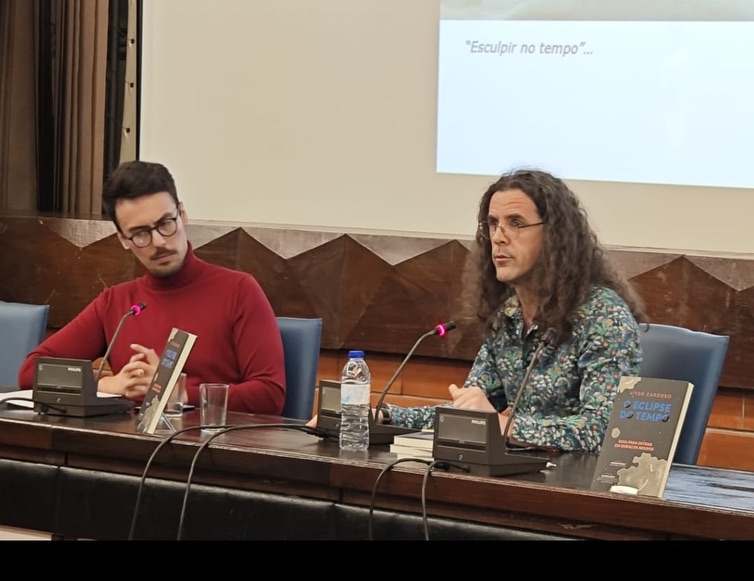 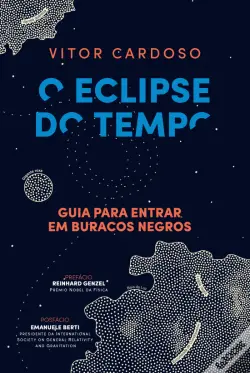
No passado dia 15 de Maio, decorreu no Anfiteatro Abreu Faro a apresentação do livro “O Eclipse do Tempo” de Vítor Cardoso. Num ambiente descontraído e num estilo de entrevista conduzida por Fábio Silva, o autor centrou-se nas grandes questões em que o livro se baseia: O que é o tempo? O que é a luz? Como mudou a mecânica quântica a nossa visão do mundo? O que são buracos negros e ondas gravitacionais? De que maneira o nosso conhecimento das leis físicas poderá mudar no futuro? Como é que o próprio universo acabará? Vítor Cardoso partilhou também com a audiência a sua visão sobre a Ciência e Investigação em geral, salientando a importância da investigação fundamental para o avanço tecnológico de qualquer sociedade moderna. | |
| | Vídeos no Canal Youtube Physics@TécnicoEstão já disponíveis no canal de Youtube Physics@Técnico os vídeos dos colóquios: - Plasmas in the semiconductor industry: modern trends, opportunities and diversity, Gerrit Kroesen (15 dezembro 2023)
- Astronomy at Highest Angular Resolution, Frank Eisenhauer (20 março 2024)
- True Measurements, False Discoveries, Tiziano Camporesi (27 março 2024)
- Novel Probes of the Primordial Liquid, Krishna Rajagopal (19 abril 2024)
- Extreme Electrodynamics of Compact Sources, Roger Blandford (19 Abril 2024)
| |
| | O MEFT no Dia dos Mestrados do IST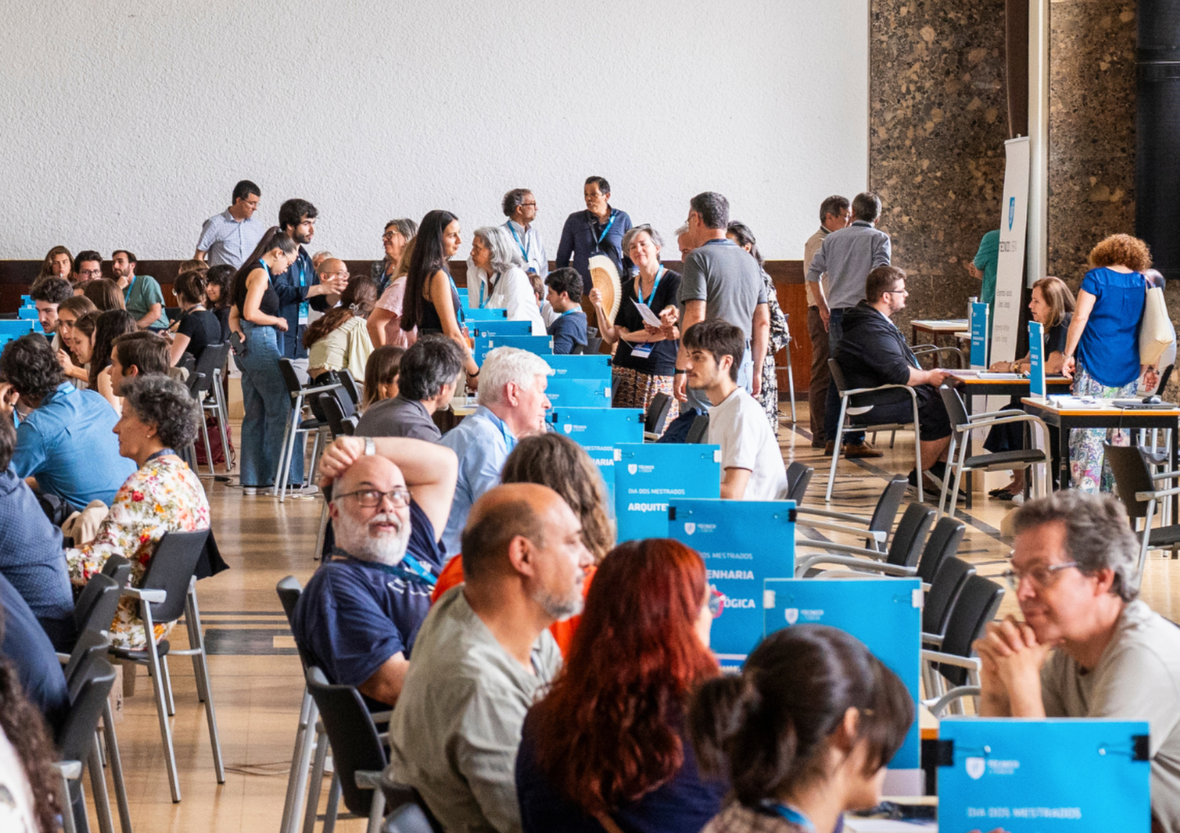
Fotografia: Instituto Superior Técnico
No dia 6 de Junho o MEFT esteve presente no evento do Dia dos Mestrados do IST, no Salão Nobre. Foi a ocasião para responder a inúmeras questões de alunos potencialmente interessados em frequentar o MEFT. Foi possível observar interesse por parte de alunos da LEFT, mas também de outras licenciaturas, em diferentes fases do seu percurso académico. O MEFT, nesta nova fase, está a despertar interesse em Alunos que gostam de Física, estejam onde estiverem. | |
| | Dia Aberto do Técnico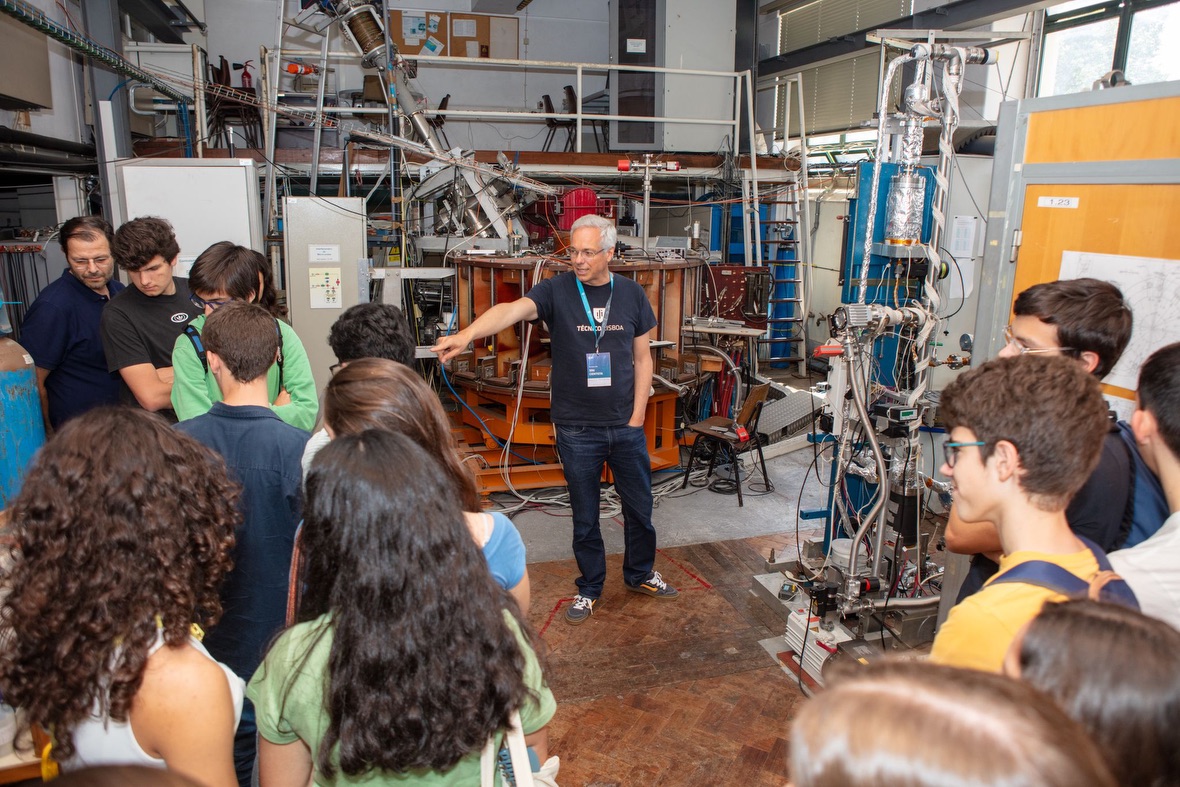
Fotografía: Victor Carreira (Técnico) Uma vez mais, o laboratório ISTTOK, o tokamak do Técnico, participou no 3º Dia Aberto do Técnico, no sábado 20 de abril, abrindo os seus espaços ao público. Nas visitas realizadas, todas elas esgotadas ao limite do espaço, os jovens e as suas famílias puderam observar de perto este dispositivo experimental, único no país. | |
|
|
|
| | Espaço +Física no Técnico
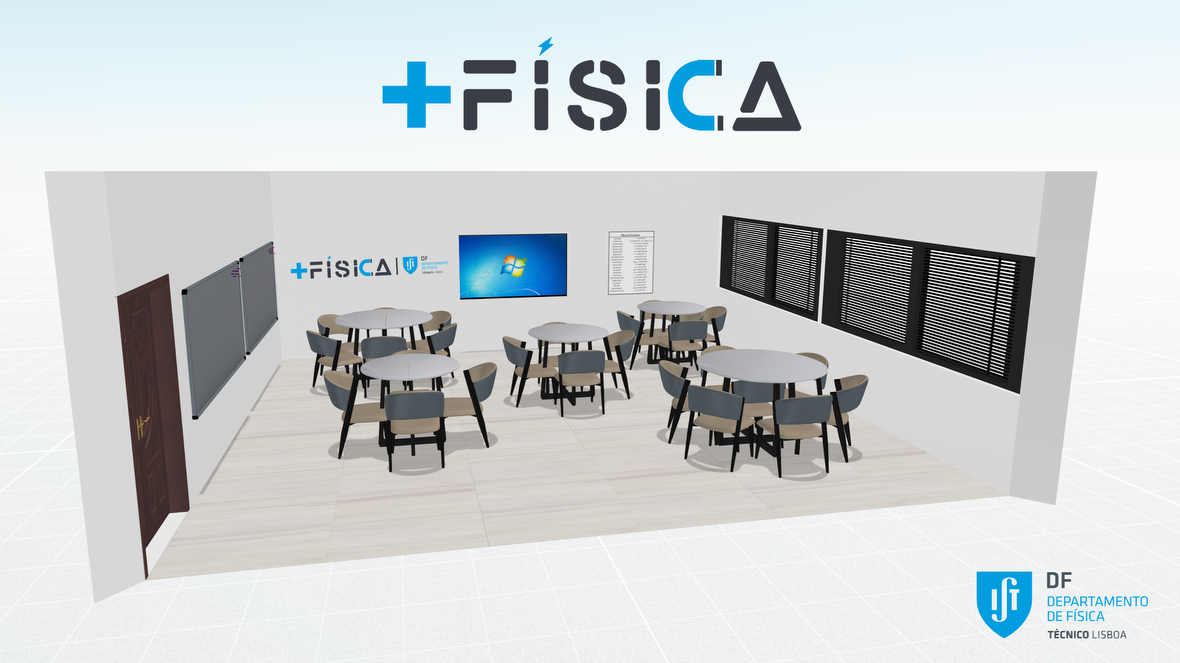
A partir do próximo ano letivo, a sala P1 do primeiro piso do Edifício da Matemática será transformada no Espaço +Física, atribuído ao DF com o objetivo de promover atividades de apoio ao ensino da Física, com especial foco nas unidades curriculares de Física básica. Uma das iniciativas previstas será a de criar um programa de apoio aos alunos do Técnico que sintam dificuldades em conceitos básicos de Física e/ou de matemática aplicada à Física. Este apoio será garantido essencialmente por monitores. O Espaço +Física funcionará também como sala de dúvidas do DF permanentemente aberta, contando com várias mesas redondas, quadros para escrita e um ecrã multimédia. Estão planeadas sessões temáticas sobre tópicos específicos em que os alunos apresentam recorrentemente dificuldades. Esperamos contar com a colaboração de toda a comunidade DF na sugestão de iniciativas para este novo espaço, no sentido de melhorar o ensino/aprendizagem da Física no Técnico. | |
| | Projeto piloto +Física@TIC
A partir do próximo ano letivo, o Departamento de Física vai lançar o projeto +Física@TIC no Técnico Innovation Center (TIC), com o objetivo de promover atividades de apoio ao ensino da Física. Este projeto terá como foco especial na aplicação da física básica a problemas de relevância atual, destacando-se pela sua natureza colaborativa e interdisciplinar, complementando assim o trabalho desenvolvido nas unidades curriculares de Física básica. Para o +Física@TIC, estão planeados projetos interdisciplinares sobre tópicos específicos, nos quais os alunos poderão aplicar os seus conhecimentos de Física básica a novos contextos da ciência e engenharia contemporânea. A “ilha” da grande sala de estudo do TIC será o epicentro destas atividades, proporcionando um ambiente propício para a interação entre alunos de diferentes cursos, fomentando assim uma aprendizagem colaborativa e multidisciplinar. Esperamos contar com a colaboração de toda a comunidade do Departamento de Física na sugestão de iniciativas para este projeto. | |
|
|
|
| | Physics@Coffee no P4
Os temas explorados nos Physics@Coffee durante o quarto período letivo 23/24 foram: - 18/04: Vigiando o Cosmos (Astrofísica e Gravitação)
- 02/05: Defeitos e Semicondutores (Física da Matéria Condensada e Nanotecnologias)
- 09/05: Desafios da Fusão Nuclear (Física de Plasmas, Lasers e Fusão Nuclear)
- 16/05: Sustentabilidade e Física Nuclear (Física de Partículas e Física Nuclear)
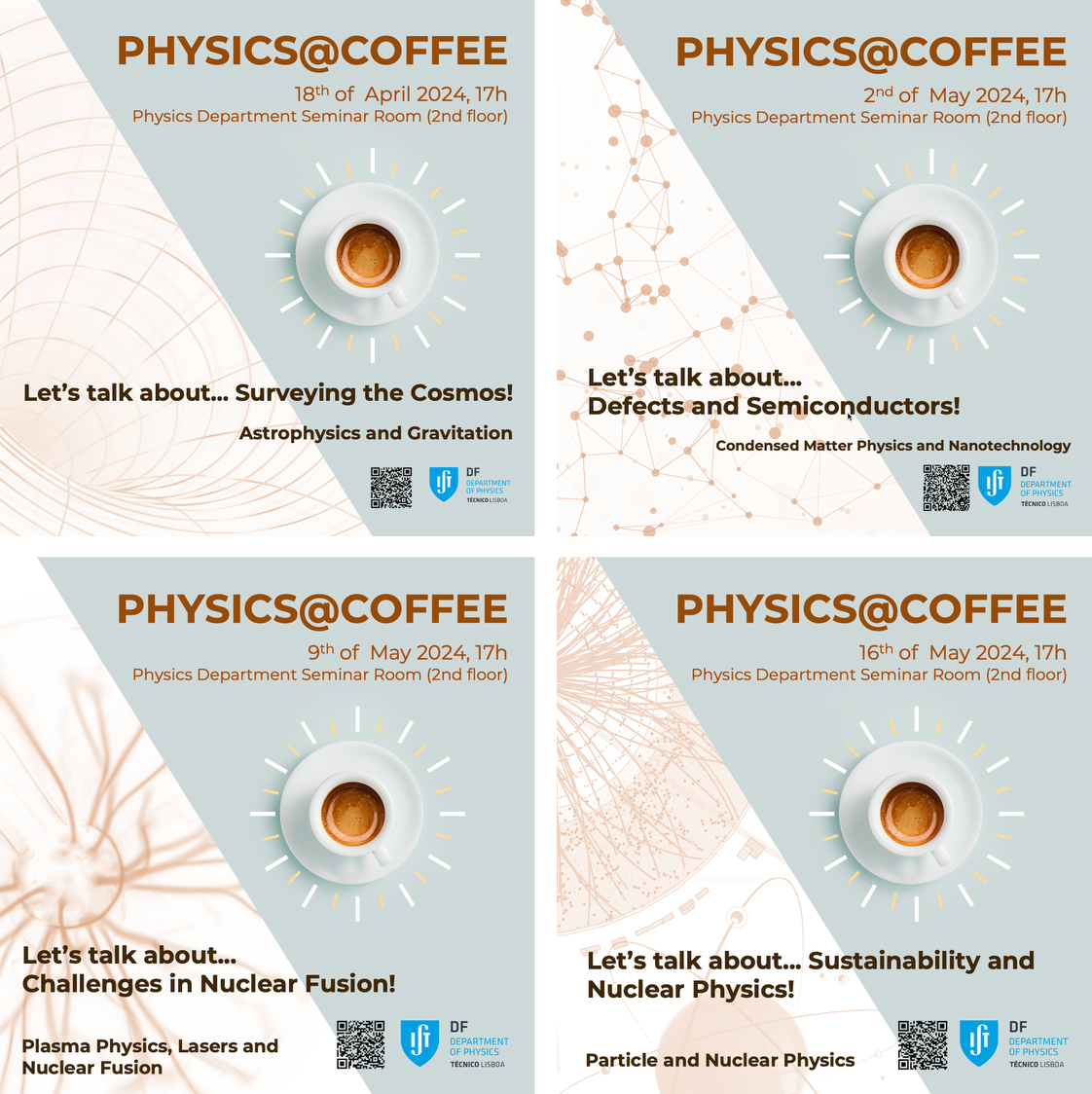
O formato dos Physics@Coffee para o inicio do próximo ano letivo será repensado, pelo que estamos abertos a sugestões de todos os colegas e alunos no sentido de melhorar esta iniciativa. | |
|
|
|
| |
Calendário do DF (Próximos Eventos)- Sessão Plenária do DF (26 de Junho, 11.30, anfiteatro PA1).
- Almoço convívio (26 de Junho, 13.00, sala P12) para todos os professores, investigadores e funcionários não docentes do DF.
- Próximos Colóquios do DF:
- Satoshi Hamaguchi (Division of Materials and Manufacturing Science Graduate School of Engineering, Osaka University, Japan), 3 Jul 2024, 16h, PA1, Future manufacturing technologies for semiconductor devices with physics-based models, data, and AI
- Desafiar os limites, 27 e 28 de Junho, anfiteatro PA1, encontro especialmente dedicado a todas as alunas e alunos do ensino secundário, eventualmente futuros candidatos à LEFT, coorganizado pelo DF e pela Coordenação da LEFT.
- Vitor Cardoso, Mastertalk, 3 de Julho, Centro de Congressos, IST.
| | | |
|
|
|
| | IST Distinguished Lecturer: Anne L’Huillier
Anne L’Huillier at the Congress Centre, IST (Photograph: M.N. Rebelo) On the afternoon of 27 May, the IST Congress Centre hosted an IST Distinguished Lecture, co-organised by the Institute of Plasmas and Nuclear Fusion (IPFN) and the Department of Physics of Instituto Superior Técnico. Laureate of the Nobel Prize in Physics last year, Anne L'Huillier gave a lecture entitled 'The road to attosecond pulses' to a packed auditorium, tracing the chronology of research into ultrashort light pulses. Anne L'Huillier ended the lecture with a message of inspiration for the students and researchers in the audience. Showing a photograph of herself receiving the Nobel Prize at a ceremony with the King of Sweden, she said, ‘If you're in the right place at the right time, maybe you'll end up here.' | |
| | IST Distinguished Lecture: Alain Aspect
Alain Aspect at the IST Congress Centre (Photograph: M.N. Rebelo) On May 23, Prof. Alain Aspect (Institut d’Optique– Université Paris-Saclay) delivered the IST Distinguished Lecture with title “From Einstein and Bell to Quantum Technologies”. Aspect was awarded the 2022 Nobel Prize in Physics, jointly with John Clauser and Anton Zeilinger, “for experiments with entangled photons, establishing the violation of Bell inequalities and pioneering quantum information science”. In this colloquium Aspect discussed his pioneering experiments on quantum entanglement and how entanglement is a key ingredient for the development of quantum technologies, namely quantum computing, quantum networks, and quantum sensing & metrology. | |
|
|
|
| | IST Distinguished Lecture: Roger Blandford
Prof. Roger Blandford (Stanford University) was the speaker at the IST Distinguished Lecture entitled "Extreme Electrodynamics of Compact Sources", which took place on April 19, 2024, organised by the Lasers and Plasmas Group of the Institute of Plasmas and Nuclear Fusion, by the Center for Astrophysics and Gravitation and the Physics Department of the Instituto Superior Técnico.
Prof. Roger Blandford is one of the world leaders in plasma physics, astrophysics and cosmology, with many pioneering contributions ranging from the mechanisms of cosmic ray acceleration and the generation of relativistic jets emitted by black holes to lenses and gravitational waves.
Blandford co-authored the book "Modern Classical Physics" with Kip Thorne and his research interests include neutron star and black hole astrophysics, cosmic rays, cosmology, gravitational lensing and astrobiology. He is a member of several scientific academies. He led the National Academy of Sciences' Decadal Survey of Astronomy and Astrophysics between 2008 and 2010, and he is currently
the director of the Simons Collaboration on Extreme Electrodynamics of Compact Sources.
Throughout his career, Blandford has received several prestigious awards, including the Dannie Heineman Prize from the American Astronomical Society in 1998, the Gold Medal from the Royal Astronomical Society in 2013, the Crafoord Prize for Astronomy in 2016 and the Shaw Prize for Astronomy in 2020. | |
| | New DF Faculty: Rúben Conceição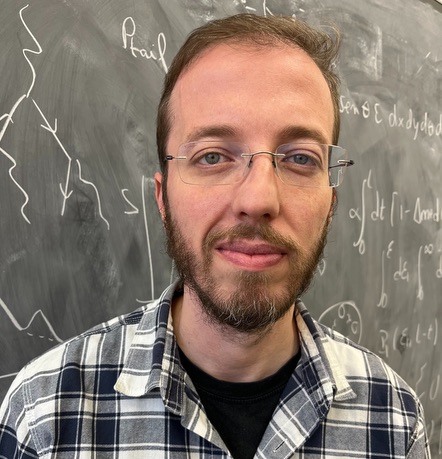
Rúben Conceição completed his PhD at IST in 2011 as a member of the Pierre Auger collaboration. In the six years immediately following his PhD, he undertook a mixed post-doc between LIP and the University of Santiago de Compostela. Recently, he secured a principal investigator position through the Individual Call to Scientific Employment Stimulus.
Rúben coordinates of the Auger group dedicated to the study of cascade physics and currently leads the Portuguese group actively participating in this experiment. In 2019, he participated in the creation of the international collaboration Southern Wide-field Gamma-ray Observatory (SWGO) and now coordinates the simulation and analysis group. His research interests focus on astroparticles physics, particularly in extensive air shower physics and high-energy hadronic interaction models. Presently, Ruben is an Assistant Professor at DF and a researcher at LIP. | |
|
|
|
| | Presentation of the book “Eclipse do Tempo” On May 15th, the presentation of the book “O Eclipse do Tempo” by Vítor Cardoso took place at the Abreu Faro Amphitheater. In a relaxed atmosphere and in an interview style conducted by Fábio Silva, the author focused on the big questions on which the book is based: What is time? What is light? How has quantum mechanics changed our view of the world? What are black holes and gravitational waves? How might our knowledge of physical laws change in the future? How will the universe itself end? Vítor Cardoso also shared with the audience his vision of Science and Research in general, highlighting the importance of fundamental research for the technological advancement of any modern society.
| |
| | New Videos on Youtube Physics@TécnicoThe videos of the DF Colloquia are already available on the Youtube channel Physics@Técnico: - Plasmas in the semiconductor industry: modern trends, opportunities and diversity, Gerrit Kroesen (December 15, 2023)
- Astronomy at Highest Angular Resolution, Frank Eisenhauer (March 20, 2024)
- True Measurements, False Discoveries, Tiziano Camporesi (March 27, 2024)
- Novel Probes of the Primordial Liquid, Krishna Rajagopal (April 19, 2024)
- Extreme Electrodynamics of Compact Sources, Roger Blandford (April 19, 2024)
| |
| | MEFT at the IST Masters Day
Photograph: Instituto Superior Técnico
On June 6th, the MEFT coordination team attended the IST Masters Day event at Salão Nobre. They took the opportunity to answer many questions from students who were potentially interested in joining the MEFT program. The team noticed a high level of interest from both LEFT students and students from other academic backgrounds at various stages of their academic careers.
The MEFT program is now attracting the attention of students who have a passion for physics, regardless of their current location.
| |
| | Open Day at Técnico
Photograph: Victor Carreira (Técnico) Once again, the ISTTOK laboratory, Técnico's tokamak, took part in Técnico's 3rd Open Day on Saturday, 20 April, opening its spaces to the public. During the visits, all of which were fully booked to capacity, young people and their families could take a closer look at this experimental device, which is unique in the country.
| |
| | +Física space at Técnico
Starting from the next academic year, Room P1 on the first floor of the Mathematics Building will be transformed into the +Física Space, assigned to the Department of Physics (DF) with the aim of promoting support activities for the teaching of Physics, particularly focusing on basic Physics courses. One of the planned initiatives is to create a support programme for Técnico students who struggle with fundamental concepts in Physics and/or mathematics applied to Physics. This support will primarily be provided by teaching assistants. The +Física Space will also serve as a permanently open help room for the DF, equipped with several round tables, writing boards, and a multimedia screen. There are plans for thematic sessions on specific topics where students frequently encounter difficulties. We hope to count on the collaboration of the entire DF community in suggesting initiatives for this new space, with the goal of enhancing the teaching and learning of Physics at Técnico. | |
| | Pilot Project +Física@TIC
Starting from the next academic year, the Department of Physics will launch the +Física@TIC project at the Técnico Innovation Center (TIC), aimed at promoting support activities for the teaching of Physics. This project will have a special focus on applying basic physics to current, relevant problems, and will stand out for its collaborative and interdisciplinary nature, thereby complementing the work developed in basic Physics courses. For the +Física@TIC project, interdisciplinary projects on specific topics are planned, where students will be able to apply their basic Physics knowledge to new contexts in contemporary science and engineering. The "island" in the main study room of the TIC will be the epicentre of these activities, providing a conducive environment for interaction among students from different courses, thus fostering collaborative and multidisciplinary learning. We hope to count on the collaboration of the entire Department of Physics community in suggesting initiatives for this project. | |
| | Physics@Coffee on P4The themes explored in Physics@Coffee during the fourth academic period 23/24 were: - 18/04: Surveying the Cosmos (Astrophysics and Gravitation)
- 29/02: Defects and Semiconductors (Condensed Matter Physics and Nanotechnologies)
- 14/03: Challenges in Nuclear Fusion (Plasma Physics, Lasers and Nuclear Fusion)
- 21/03: Sustainability and Nuclear Physics (Particle and Nuclear )
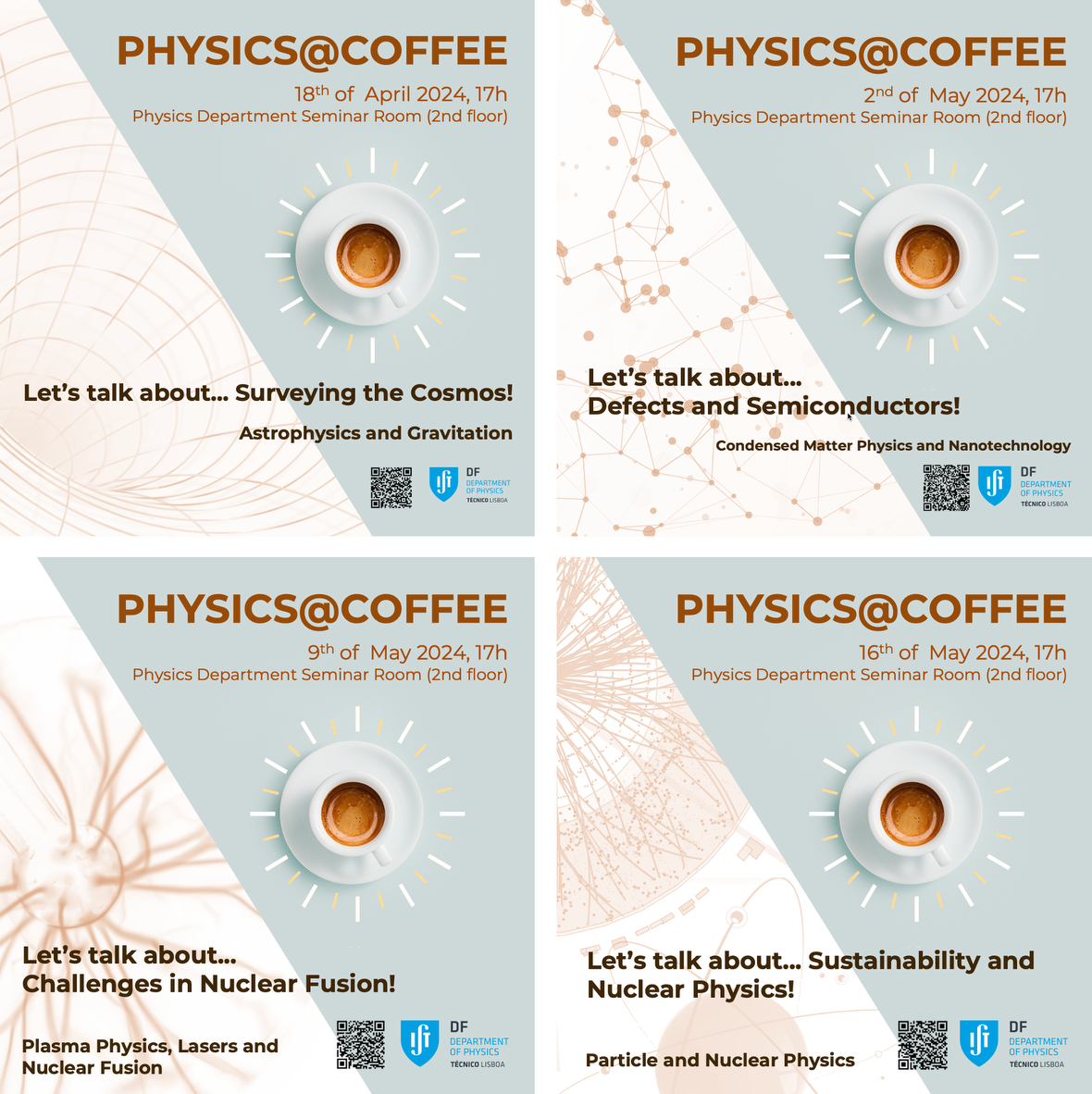
The Physics@Coffee format for the next academic year will be rethought, so we are open to suggestions from all colleagues and students in order to improve this initiative.
| |
| |
DF Calendar (Upcoming Events)- DF plenary session (June 26, 11:30 am, PA1 amphitheatre)
- Convivial lunch (June 26, 13:00, room P12) for all DF teachers, researchers and non-teaching staff.
- Next DF Colloquia:
- Satoshi Hamaguchi (Division of Materials and Manufacturing Science Graduate School of Engineering, Osaka University, Japan), 3 Jul 2024, 16h, PA1, "Future manufacturing technologies for semiconductor devices with physics-based models, data, and AI"
- Desafiar os limites, 27 & 28 June, PA1. This outreach event is intended to high-school students who may be future LEFT candidates, co-organised by the DF and the LEFT Coordination.
- Vitor Cardoso Mastertalk, 3rd of July, Congress Centre, IST.
| |
|
|
|
|